
Knowledge, Innovation and Strategies Management Club
  • Home
  • About
  • Projects
  • Initiatives
    • Events
    • Partnerships
  • Membership
    • Innovation Contributors
    • VIP Members >
      • Join KISMC
  • Blog
  • Contact
  • Home
  • About
  • Projects
  • Initiatives
    • Events
    • Partnerships
  • Membership
    • Innovation Contributors
    • VIP Members >
      • Join KISMC
  • Blog
  • Contact

Scaling Up in Europe at Steps2Scale

27/11/2017

Comments

 
Scaling up in Europe at Steps2Scale
Steps2Scale is a new project where the Knowledge, Innovation and Strategies Management Club is a partner along with other organisations from Bulgaria, Austria, Spain, Slovenia and the United Kingdom. The project has been co-funded by the ERASMUS+ Programme of the European Union and aims at creating a harmonized qualification and competence framework for the profession Scaling up Adviser which currently does not exist in any EU country.
​

Why a project for scaling up in Europe?

To those who haven't had a chance of exploring this topic, it is a fact that Europe is hosting around 4200 scaleups (SEP Monitor; Scaleup Europe, June 2017). 

INFO: * Scaleups are high tech companies with minimum 5 years of experience on the local market, already proven and well established market niche, have developed internationalization strategy and readiness to go and find new markets as well as add value by identifying and realizing win-win opportunities for collaboration with established companies. Scaleups are already past the search phase, thrive in the execution phase of the business model and exist on top of a solid startup ecosystem.

​The new Start-up and Scale-up Initiative of the European Commission (EC) focuses on providing opportunities for innovative entrepreneurs to become world leading companies, improving the conditions for startups and scaleups and enhancing competitiveness in Europe. Besides this initiative, there are joint efforts to boost the growth of startups and SMEs in Europe but it has been concluded that very few make it beyond the critical first few years. Therefore, the European Commission is determined to change that and help startups deliver their full potential by creating a culture that supports growth. We all know that it is considered that small businesses are the backbone of a country's economy, but exploring deeper it does appear that growing companies bring prosperity whereas such an ecosystem needs to be cultivated and stimulated.

"The goal is for Europe to become the first choice for ambitious entrepreneurs to set up and grow their breakthrough business ideas into successful companies in well-performing ecosystems. In return, they will create new jobs, foster social responsibility and some will become global leaders." (Start-up and Scale-up Initiative; EC, 2016).

What are the Steps2Scale's objectives?

The objectives in the Steps2Scale project are concentrated on the development of support system in the field of adult education and training; support to entrepreneurs in the key phase of the lifecycle of their business and support the entrepreneurial culture in Europe whilst establishing new innovative managers too.

Partners in Steps2Scale
  • Bulgarian Industrial Association – Union Of The Bulgarian Business, Coordinator, Bulgaria
  • Birmingham Chamber Of Commerce And Industry, United Kingdom
  • University of Deusto, Spain
  • ECQA GmbH, Austria
  • Obrtno-Podjetniska Zbornica Slovenije, Slovenia
  • Knowledge, Innovation and Strategies Management Club, Bulgaria


​
Picture

The European Commission support for the production of this publication does not constitute an endorsement of the contents which reflects the views only of the authors, and the Commission cannot be held responsible for any use which may be made of the information contained therein.

Comments

KISMC at the 2nd BASET Project Meeting held in Greece

27/4/2017

Comments

 
KISMC BASET Greece

​

​On 2 April 2018 all partners in the BASET project gathered for the 2nd project meeting in Piraeus, Greece. The project coordinator Knowledge, Innovation and Strategies Management Club (KISMC) and the project partners CEED Bulgaria, IDEC, Caban Capital and Creative District presented social entrepreneurship case studies from each country with regard to the Social Entrepreneurship Development Model (SEDM) for BASET: Boost Aid for Social Entrepreneurship through Training.

​
For more information on the Project Meeting in Greece, please read here

Picture
Picture
Comments

7 fascinating conclusions from the international conference "INNOVATION - Creating the Future"

12/12/2016

Comments

 
Picture
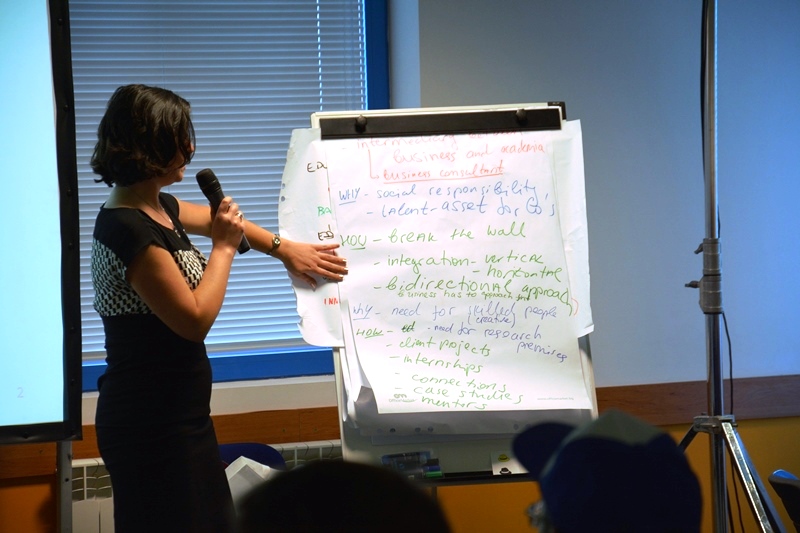
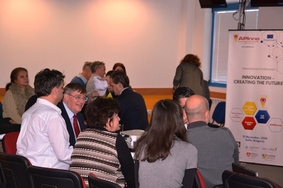
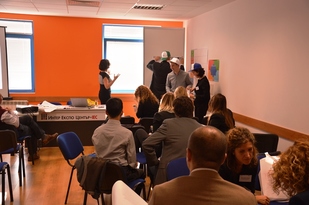
The international conference "Innovation - Creating the Future" was attended by more than 200 delegates from over 15 countries, brought businesses and universities together and provoked them to brainstorm on how to work together for a better future for both parties and how innovation could be an integral part for a better collaboration.

After months of preparation and challenges the team at the Knowledge, Innovation and Strategies Management Club together with the State University of Library Studies and Information Technolgies and the partners from the Erasmus+ funded APInno project did host not only a successful event summarising the benefits the results of the project will bring, but an event full of excitement, great networking and plenty of follow ups bringing potential opportunities for everyone. There have been missed flights, travelling for days to come from the other side of the globe, emotions, exhaustion, sleepless nights for some but the enthusiasm and the sparks around the conference main hall and additional rooms were simply amazing.

The whole APInno team were also extremely delighted to have 20+ universities from different countries, 80+ companies, social partners and policy makers which contributed to a valuable discussion throughout the whole day of 21 November 2016 in Sofia, Bulgaria.

If you missed the opportunity to join us at this illuminating event, we have recapped 7 conclusions drawn from the conference day below.

Picture
Picture

1. Innovation for collaboration needs a structured process

Innovation plays a focal role in the university and business collaboration BUT this role needs to be structured the same way innovation is a systematic process. Therefore, after trials and erros for 2 years the APInno project established an innovation management methodology which is based on expriential learning in order to bridge the large gap between what workforce universities 'produce' and what companies actually need. The methodology shows us that from the messy idea generation moment through concept development and pipeline management, execution and implementation have to follow.

2. The university model requires a fundamental change

The public is already beginning to question the value higher education provides to society. It is obvious that things need to change as we can all observe how students have troubles finding appropriate jobs after graduating and trying to settle their debts which they took to be able to study at a university. Therefore, instead of making money and contributing to the economy, students waste time and incur expenses. Yes, the university model needs to be fundamentally altered so they could feed businesses with the energy and enthusiasm of skillful employees ready to 'fight' in a competitive world where innovation is not only a buzz word but reality.

3. Innovation is not about technology at all

We see new mindsets, new generations, new organisations appearing on the horizon. We also see new markets emerging. The world has moved from having thousands of businesses each with millions of customers to millions of businesses with hundreds of thousands of customers. This is a result from shifting to technology-supported industries. However, innovation is not about technology at all, it is about how we efficiently and effectively use what we have in order to produce value for ourselves and others.
Picture
Picture

4. Design thinking - a buzz word for business success?

Perhaps most people have already observed that creativity and innovation have become buzzwords for business success, followed by terms such as ‘Design Thinking’ creeping into business education. However, some research shows us that there is around 20% decline in creative capacity of learners in the past 20 years. In an era when creativity is in demand, we need to first understand the creative thinking process and the difference between implementation (doing things that are determined by others and matching against their expectations) and innovation (producing multiple and varied solutions that respond to change and often surprise).

5. Entrepreneurs have to focus on designing

The entrepreneurial journey is simple: starts from an idea, right through a business model to the business plan. However, entrepreneurs need to take into consideration the market desirability, financial viability and technical feasibility of the business they are trying to establish. Therefore,  designing a business model is the essence of a business opportunity, whether it is to be pursued in a start-up, corporate venturing or social entrepreneurial setting.

Picture
Picture

6. Balance the academic and commercial interests

Universities are a great source for technological opportunities for creating high-technology ventures. Despite that, universities are generally characterized as having weak capabilities for the development of commercial applications. The academic culture values getting its hands on research, but the commercial and entrepreneurial aspect comes right outside it and this is a sensitive issue. Academia has to develop not only creative and confident minds but commercially oriented graduates prepared for the business challenges they will come across.

7. Internships and real work for students is a must

The APInno project has proven once again the importance of business and academia partnership. But the collaboration focuses on the topic of innovation and this has brought new amazing ideas for future work on assisting the two parties. The project sets out important points to look at, for example, how such collaboration can accelerate the university-work transition for students through internships and how setting real innovation challenges to be solved by students could be a real asset for businesses. Indeed, it's a win-win for everyone.
Picture
Comments

Last chance to register for "INNOVATION - Creating the Future" [Only 18 places left]

15/11/2016

Comments

 
Picture
Don’t miss out on a conference programme featuring speakers from the UK, Spain, South Africa, Romania and Bulgaria who have international exprience in various industries in the area of innovation, entrepreneurship and education.

The event is almost fully booked
and we don’t want you to miss out on this opportunity where you have the chance to not only get into great discussions Innovation in Education & Education in Innovation, but play games and network with over 150 guests from 15+ countries.

LEARN MORE AND REGISTER NOW


With only a few days until the "INNOVATION - Creating the Future" conference opens its doors on 21 November 2016 in Sofia, Bulgaria, there are still 18 places left (at the time of speaking). Of course, if these are taken up fast, then you would get on our reserve list and wait until someone already registered drops out. Therefore, you could still have a chance to make the most of such an event and network with all the international delegates on coffee, lunch and a glass of wine by REGISTERING NOW.


Having in mind that the conference does not have a registration fee, all you need to do is hurry up and go to the event page, review the information and register as soon as possible in order to secure your spot at the conference.

REMINDER: The conference registration is by 17 November 2016


The focus of "Innovation - Creating the Future" would be on opportunities and challenges businesses and universities face in working together for mutual benefits. It will give you the opportunity be to contribute to a positive change in the business-university collaboration through innovation.

Comments

Innovation in Education & Education in Innovation [Join the discussion on 21 November]

14/11/2016

Comments

 
Picture
In this blog publication we are presenting the discussion panels speakers of the international conference "INNOVATION - Creating the Future" which will take place on 21 November 2016 in Sofia, Bulgaria.

We have experts and professionals with experience in the field of innovation, entrepreneurship, new business model generation, knowledge management, open innovation and social innovation, design thinking, R&D, business development, startups, NGOs, etc. In the meantime, if you are also curious to review the experience of our keynote speakers, you can find more information here.

With the event approaching in less than a week and registration closing on 17 November, you can review the speakers at the two discussion panels Innovation in Education & Education in Innovation below and decide if you would like to come and meet all the speakers and international guests from over 15 countries (the number keeps growing with every post we write).

  • Innovation in Education - best innovation practices in education and the contribution of businesses to the business-university collaboration
  • Education in Innovation - best practices of education contributing to the business innovation and collaboration of academia with organisations
READ MORE AND REGISTER FOR THE CONFERENCE NOW


Innovation in Education

Picture
Estíbaliz Hernandez is a researcher at Mondragon Innovation & Knowledge (MIK), the research center for organizational management of Mondragon Corporation and is also the Director of the Degree in Business Administration at the Faculty of Business of Mondragon University (Basque Country, Spain), where she is a lecturer too. Both MIK and the University of Mondragon are part of the Mondragon Corporation, a leading Spanish business group, integrated by 250 business cooperatives with presence in 41 countries that employs more than 80 000 people. Her research has been mainly conducted in the field of innovation, entrepreneurship, new business model generation and knowledge management. She is a PhDc in the domain of User Driven Innovation in Service Industries, and holds a degree in Business Administration from the University of Deusto (Spain) and the Hoge Hotelschool Maastricht (Holland) and an MBA Master from the University of Mondragon (Spain).

Picture
Pilar Tovar is a Social Educator and Educational Psychologist who works at Fondo Formación Euskadi (Trápaga, Basque Country). She holds a Master Degree on Human Resources and a Master Degree (with Honours) on Social Innovation and Culture Industries and is also an expert on Community Correct Process (PROCC Methodology). For several years, she has jointly been leading Demola Basque Country node as part of the Demola network: a co-creation and open innovation project. Pilar, along with her team, guides companies and students by giving them the opportunity to work together, learn from each other and develop new joint solutions (DEMOS) in a highly innovative environment. As a coach, mentor and facilitator of these projects, she designs her own tools and methodology in social business (Value creation proposition) and open innovation ("Design Thinking", "Thinking out of the box", "learning by doing and solving problems"). Pilar is also a social entrepreneur. For years she has been leading projects with schools, Public Care centers and the Community in healthy diet, launching building relationship promoting social Cohesion, networks, etc.

Picture
Magda Ropotan is an Innovation Consultant and Design Thinking Facilitator from Romania.  After 13 years of working in human resources for large corporations, such as Honeywell, Genpact and IKEA, both in Romania and internationally, Magda moved into consultancy, supporting companies to innovate organically through the creativity and involvement of their own employees. Her clients range throughout Europe for whom she facilitates innovation projects, training, coaching and consultancy for their innovation strategy. She is also teaching innovation classes within several entrepreneurship education programs in Romania. Magda holds a degree in Robotics Engineering and studied about innovation, foresight, design thinking and trends in Silicon Valley, Denmark and Netherlands.


Watch the conference video now!


Education in Innovation

Picture
Ruslan Papazyan is the Regional Managing Director of Trelleborg Sealing Solutions responsible for Bulgaria, Romania, Greece, Serbia, Belarus, Ukraine and is also Head of Trelleborg’s Export Markets in South-East Europe, Middle East and Africa. Before joining Trelleborg he held various positions in ABB Sweden such as manager business development, group manager R&D and R&D project manager. He graduated the Electrical Engineering Department of the Royal Institute of Technology (KTH), Sweden as a Doctor of Science. Ruslan also won a prize for best R&D in the field of maintenance techniques for the electric power industry from the Swedish Electrical Utilities' R&D Company - ELFORSK. He holds an MBA from the University of Sheffield and had been rewarded “Next Generation Manager” amongst 54 Bulgarian managers.

Picture
Steve Stott is an experienced offline and online multi-channel retailer with a passion for helping people succeed with over 20 years multi-level retail experience providing support, training and motivation to start-ups and growth companies. Having set up and ran a successful online business he understands the unpredictable world of running your own business. Steve is currently offering business consultation in collaboration with DEW (Developing Entrepreneurial Winners).

Picture
Svetlana Lomeva was appointed Director of the Sofia Development Association by the Sofia Municipal Council. She holds an MA degree in Political Science from Sofia University. She has been Deputy Minister of Education, Youth, and Science (2009 – 2010). Mrs. Lomeva is one of the founders and Director of the Bulgarian School of Politics (2001 – 2009) and the Political Academy for Central and Southeastern Europe. Svetlana has had several specialisations at Robert Schumann Institute, Budapest; the American University in Bulgaria; the Council of Europe.

LEARN MORE AND GET YOUR FREE TICKET NOW
Comments

6 remarkable keynote speakers at the international conference "INNOVATION - Creating the Future" in Sofia

4/11/2016

Comments

 
Speakers at INNOVATION - Creating the Future
The APInno team behind the international conference "INNOVATION - Creating the Future" which will take place on 21 November 2016 in Sofia, Bulgaria is pleased to have amazing speakers with diverse backgrounds and experience in innovation, entrepreneurship and education.

In this blog post we are showcasing the keynote speakers and their experience while we will still have a publication about our speakers at the discussion and games panels. Although you would notice that most speakers are representing universities, all of them have a broad industry exprience ranging from starting businesses on a variety of continents to management exprience in the creative and hospitality sector, aerospace and electronics to leading institutions commercialising innovation. In addition to the industry practice, our keynote speakers provide trainings and lectures in areas such as entrepreneurship, innovation management, cultural management, design thinking, 3D printing and others.

Our 6 speakers are either former or current Innovation Managers, Entrepreneurs, Senior Managers, Directors, CEOs, Trainers and Researchers. Therefore, you would be able to hear every side of how to make innovation happen.

Take a closer look below to find your added value in the conference where you would not only listen to the speeches, but where you could take part in the discussions and meet all the speakers and international guests from over 12 countries.

Learn more about the conference


Keynote Speakers

Picture
1. Dr. Simon Best - Middlesex University, United Kingdom

Simon is a Senior Lecturer at Middlesex University Business School. He is the Programme Leader for the M.Sc. Innovation Management and Entrepreneurship and the Project Leader of EDH@MDX, the enterprise development hub. He is also the university lead for APInno and SBeA, two Erasmus funded projects. Alongside these roles Simon is a Teaching Fellow. Simon has been involved in entrepreneurship on a global scale. Over a period of 30 years he has started businesses in India, Viet Nam, Papua New Guinea and Australia. Simon has also been a consultant to small and medium businesses in Japan, Taiwan, India, South Africa and Viet Nam. More recently he has been delivering workshops and seminars in Hungary, USA and Viet Nam to emerging entrepreneurs.


Picture
2. Prof. Andy Penaluna - University of Wales Trinity Saint David, United Kingdom

An international thought leader in developing enterprising creativity through education, Andy has advised Welsh Assembly and Westminster Governments and is an expert at the United Nations in Geneva. He has led discussions at the European Commission, developed teacher training for 8 countries in South East Europe, and was commissioned by the OECD to write international education policy guidance. Funded by the World Bank, he also led the development of what is believed to be the world’s first integrated (compulsory) school curriculum for innovation and entrepreneurship in Macedonia (FYROM).


Picture
3. Dr. Zuleika Beavan - Middlesex University, United Kingdom

Zuleika has more than two decades of experience in the creative industries and she was a senior lecturer in Arts Management at the Arts University Bournemouth, taught on the MA in Cultural Management at the University of Winchester and was a researcher in the Cultural Management Applied Research Group at the University of Greenwich. Drawing on her research focus of work in the music business, Zuleika's PhD was a longitudinal study of musician start-ups. She also has an interest in the effects of technology on the industry and is carrying out a Research Council-funded case study of a Kickstarter-supported album recording and release.


Watch the conference video!
Picture
4. Eduardo Díaz - Fundacion madri+d, Spain

Eduardo is currently in charge of the new technology-based firms unit at Fundacion madri+d. He is a former Innovation Manager consultant and university lecturer. Eduardo is an expert in the fields of startups, innovation, regional development, technology auditing, technology transfer and cluster policies and he also has technical and management experience in the electronics and aerospace sectors. Eduardo is coordinating regional, national and international programmes in the fields of Entrepreneurship, Startup Funding, Venture Mentoring and R&D Commercialisation including Innovation and Entrepreneurship studies and publications. 


Picture
5. Raluca Pauna - Institute of Inventors and Innovators, South Africa

Raluca is the director of the Institute of Inventors and Innovators and EgoliBio incubator/SEDA in South Africa as well as the CEO of the Global Institute of Accelerating Innovation. Having started her career in Romania working at Government Ministerial Departments and at the Research Institute of Fine Mechanics and Instruments, Raluca took on an international career as a member of the EU Leadership Thinking Tank in Brussels and then onto TECHNONET AFRICA, a network for supporting Africa's entrepreneurs. She is qualified (Stanford, CA) to do Design Thinking sessions and focused trainings for emerging innovators and entrepreneurs such as Innovation Management, Technical Entrepreneurship, Strategic and Marketing Planning for Commercialisation of Innovation and applied Competitive Technical intelligence methodologies and tools. Raluca has also been an IBM International mentor for the IBM Global Entrepreneurship Programme since 2013 and was a judge in the panel of judges for the Innovation Summit Garage at Cape Town Competition 2014. At present she is also organizing 3D printing training using design thinking methodology in collaboration with VUT.


Picture
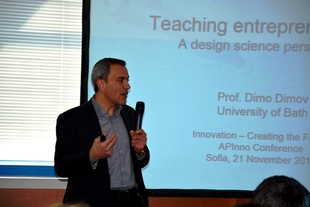
6. Prof. Dimo Dimov - University of Bath, United Kingdom

Dimo is a professor of Innovation and Entrepreneurship at the School of Management, University of Bath. He has recently been recognised as one of the 100 leading entrepreneurship professors for 2015. Prior to joining the University of Bath, in 2012, Dimo was on the Entrepreneurship faculty at Newcastle University, on the Management faculty at University of Connecticut and on the Entrepreneurship faculty at IE Business School in Madrid, Spain. Prior to entering academia, he enjoyed a career in the hospitality industry with Marriott International and was a finance director for two hotel businesses in Budapest, Hungary.

It's Time...

With the “Innovation – Creating the Future” conference approaching, we advise you to register as soon as possible because places are filling up fast. We would like to remind you that there is no participation fee and you can REVIEW THE CONFERENCE INFORMATION and REGISTER HERE


Comments

Sofia City of Knowledge Cluster [News]

27/10/2016

Comments

 
Picture
On 25 October 2016 the Sofia City of Knowledge Cluster (SCKC) was established where the Knowledge, Innovation and Strategies Management Club is one of the 26 founding members.

The initiative of founding the cluster is a common endeavor of a group of entitites located in Sofia such as science, education and business representatives which are all supported by the Sofia Municipality in response to the need of creating conditions for the implementation of the Strategy for Smart Specialisation of Sofia.

The SCKC aims at transforming the city into a national and regional centre for education, advanced research, innovation and entrepreneurship based on information and communication technologies.
Comments

International Conference "INNOVATION - CREATING THE FUTURE"

20/10/2016

Comments

 
Picture
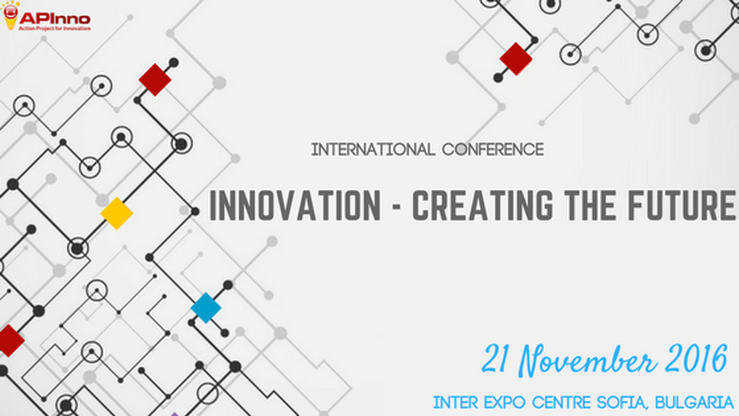
The international conference "INNOVATION - CREATING THE FUTURE" will present the results of the Action Project for Innovation (APInno) under the EU Programme for Education, Training, Youth and Sport - ERASMUS + . The conference will showcase the final results of a two-year project where international partners from the UK, Spain, Italy and Bulgaria had been working on developing an experiential learning methodolgy in the field of innovation management  for fostering the partnership between business and universities.

"INNOVATION - CREATING THE FUTURE" will take place on 21 November, 2016 in Inter Expo Center Sofia, Musala Hall, blvd. "Tsarigradsko shose" 147, 1784 Sofia, Bulgaria.

Innovation Culture

The topic and concept of innovation management is still underexploited in Europe despite the efforts and financial resources provided by the respective framework programmes and financial instruments. Although а common standard is established, the concept of systematic management of innovation is not very widely used in reality. Business leaders agree that the insufficient innovation and entrepreneurial culture is holding back Europe’s economic growth. In this respect innovation management is and will be the necessary tool for businesses to achieve higher competitiveness and better conditions for economic results.

Business-University Collaboration

The APInno project aims at fostering business–university collaboration as one of the key factors enhancing the innovation culture in organisations. The project partners followed an innovative approach, developed and tested a new model and methodology for new skills and knowledge development in the field of systematic management of the innovation process. Moreover, a flexible and holistic model for successful partnership between companies and universities has been developed. Its further use and implementation could help organisations be more innovative and successful.

THE CONFERENCE

The conference will provide the opportunity for discussion of the future challenges higher education and business organisations face; exchange of good practices and experience, both by business and several academic organisations in Europe. The keynote speakers and panelists  have many years of experience of teaching and consulting in the field of innovation and entrepreneurship.

The partners in the project are: Knowledge, Innovation and Strategies Management Club, University of Library Studies and Information Technologies, Anfi Ventures, Tecnalia, JODA Training and Middlesex University.

We advise you to register now to secure your place at the conference.


register now
See Conference Agenda
Picture
APInno Reference Number: - 2014-1-BG01-KA203-001561
Comments

KISMC joined the United Nations Global Compact [News]

30/9/2016

Comments

 
Picture
The Knowledge, Innovation and Strategies Management Club joined the Bulgarian Network of the United Nations Global Compact in September 2016. KISMC was awarded a Certificate for joining the Global Compact and committing to promote the Ten principles of Global Compact in its everyday operations. The certificate was received at the National Council meeting on 20th September by Mr. Ognian Trajanov, Chairperson of the Steering Committee.

The Global Compact is the worlds largest corporate sustainability initiative with over 12 000 organisations involved from 170+ counries. The Compact is a voluntary initiative of the former UN Secretary General, Mr. Kofi Annan, bringing together business and non-governmental organizations, academic institutions, cities and UN agencies in a truly global forum to promote sustainable growth and civic responsibility. The ten Principles of the Global Compact are aimed at the implementation of responsible business practices in the field of human rights, labour standards, environment and anti-corruption.

The Bulgarian Network of the UN Global Compact, which operates as part of the global network and was officially launched on May 6, 2011 by H.E. Ban Ki-moon – Secretary General of the UN, is an association of companies and NGOs.

Reasons for KISMC to join the UN Global Compact

One of the main reasons for KISMC to join is to contribute and support one of the Sustainable Development Goals, i.e. Industry, Innovation and Infrastructure. This objective foresees the following development locally in Bulgaria:

  1. Development of the intelligent specialization in Bulgaria

  2. Areas for improvement (weaknesses) – lack of:
  • Integration and collaboration between academia and business
  • Market for innovations
  • Intellectual Property Rights (IPR) culture
  • Financial instruments and sources for innovation


Sustainable Development Goals of the initiative

The Sustainable Development Goals of the UN Global Compact strive for improving the world via a collective way. In September 2015 a plan for achieving a better future for all was adopted, i.e. to end extreme poverty, fight inequality and injustice, and protect the planet Earth. At the heart of “Agenda 2030” are the 17 Sustainable Development Goals.

For more information on the Sustainable Goals, please read here

The 10 Principles of the UN Global Compact

The UN Global Compact’s Ten Principles are derived from: the Universal Declaration of Human Rights, the International Labour Organization’s Declaration on Fundamental Principles and Rights at Work, the Rio Declaration on Environment and Development, and the United Nations Convention Against Corruption.

  1. Businesses should support and respect the protection of internationally proclaimed human rights.
  2. Make sure that they are not complicit in human rights abuses.
  3. Businesses should uphold the freedom of association and the effective recognition of the right to collective bargaining.
  4. The elimination of all forms of forced and compulsory labour.
  5. The effective abolition of child labour.
  6. The elimination of discrimination in respect of employment and occupation.
  7. Businesses should support a precautionary approach to environmental challenges.
  8. Undertake initiatives to promote greater environmental responsibility.
  9. Encourage the development and diffusion of environmentally friendly technologies.
  10. Businesses should work against corruption in all its forms, including extortion and bribery.


Comments

2 years Mercury - Jupiter meetings for business people and scientists

18/12/2015

Comments

 
Picture
During 2013-2015 CSI, in cooperation with the Knowledge, Innovation and Strategies Management Club, betahaus Sofia and Sofia Tech Park had been organising the so called Mercury - Jupiter Meetings to bridge the gap between scientists and business people in Bulgaria and help them understand each other’s culture. At those meetings groups of scientists and business people talked about their cultures and  discussed ways to bridge the gap between each other.

For the span of those two years the meetings gathered interest from the Bulgarian community and many attended to get involved in the discussions and look for the best ways to reduce the size of the gap between scientists and businessmen.

The Mercury - Jupiter meetings were also attended by guest speakers who would guide the meeting towards a specific topic. The topics of discussions had been related to the experience of the speakers. Below you could see some of the guest speakers during 2013-2015.
  • Richard Smits - the owner-director of CSI. He was born in the Netherlands and received his education as a chemical engineer (Ph.D.) from the University of Twente. He worked for Haldor Topsøe A/S of Denmark as an R&D project manager for several years before moving to Bulgaria to start CSI. He knows the requirements of industrial research from the inside and has a wide experience in dealing with various cultures.

  • Nikolay Tashev - has a B.Sc. in Мanagement from Manchester University and is the owner of Inomrezha, a company that teams up with engineers, scientists and other technically oriented people with good ideas to start a business to bring their innovations to market. He spoke about the companies he started and his experience in cooperating with technically skilled people to create business.

  • Elitsa Panaiotova - the Executive Director of Sofia Tech Park - the company that is developing a large-scale project aiming to strengthen the research, innovation and technological growth in Bulgaria - the first Science and Technology Park. She spoke about the future goals of the park and how it would connect people from the business sector with those of the scientific community to make Bulgaria a more innovative country.

  • Nikolai Denkov - a professor of physical chemistry in the Faculty of Chemistry & Pharmacy, Sofia University, where he studies foams, emulsions, surfactants and their applications. He was a lead researcher in R&D centers of the companies Rhodia (France) and Unilever (USA), and has led numerous international research projects. He is a co-founder of the civil platform MoveBG. He talked about the cooperation between scientists and business, based on his experience with the companies Unilever, BASF and Saint Gobain.

  • Sjoerd Oppewal - has an economic and a human resource and organization development education, and has been personnel manager of the Dutch research organisation for water management for 13 years. He is now a consultant on change management and organization development, based in Bulgaria. He talked about his experiences as personnel manager in a period when the research institute saw its state-financed budget reduced from 70% to 30% in 3 years, and had to adapt its culture from one of applied science to one of market-oriented professional consultancy. The institute is now known as Deltares, an applied research and consultancy organisation with 800 employees and worldwide operations.

  • Milena Koleva - an innovation management consultant and secretary of Knowledge, innovation and strategies management club (KISMC) with practical experience in industry and management consulting. She talked about "educating business people and scientists to cooperate on innovation" and briefly presented the initiative of KISMC for Innovation Management Academy - i.e. creating organizational, resource, and staff conditions for dissemination and practical application of innovation management in companies as an instrument for competitiveness. Nowadays everyone is talking about the gap between academia and business, but does it really exist? Can business be more innovative without the cooperation with academia and vice versa? And where is the fine line between the two, given their common goal to produce innovations for a better future for all of us?

  • Tsvetoslava Kyoseva - an Innovation and Business Development consultant with more than 11 years practical experience in the telecom industry. Her professional career began in Mtel, where she held various positions gradually as a manager of local and international projects, and later on leading the development of long-term strategies for the implementation of various technologies and innovative products within the company. Currently she is a PhD candidate in the field of technological innovation at the Technical University of Sofia and she is specialising entrepreneurship and innovation in Vienna, Austria. She talked about “The innovation-invention gap between the two worlds of business and academia”.

  • Prof. Venko Beshkov - director of the Institute of Chemical Engineering, BAS, and of ICHEM-BAN OOD, on the successful commercialisation of knowledge in chemical engineering.

  • Emil Komatichev - a senior expert in the ‘Innovation and Entrepreneurship’ Department, 'Economic Promotion Policies' Directorate of the Ministry of Economy. He has participated in the development of important strategic documents of the Bulgarian Government including the ‘Innovation Strategy for Smart Specialization’, assessments of many innovative projects under OP Competitiveness, in the setting up of entrepreneurial centres in technical universities, in the development of schemes to promote cooperation between business and science (e.g. the voucher scheme) and others.

  • Teodora Georgieva and Ruslan Stefanov - work for the Applied Research and Communications Fund (ARC Fund), the premier Bulgarian innovation policy and research institute. They are co-authors of Innovation.bg, an annual assessment of the current performance of the national innovation system and the implementation of the national innovation policy. At the Mercury-Jupiter meeting, they presented information and conclusions from the latest edition of this assessment in order to discuss how people from the science and business sectors can contribute to improvements in Bulgaria's innovation performance.

  • Simeon Stoyanov - graduated from Sofia University in chemistry, physics and mathematics, and then obtained his PhD in physical chemistry from the University of Essen. He is now a senior scientist at Unilever R&D in the Netherlands, being deeply involved in Unilever's research co-operations with various universities (including Sofia University). He combines this position with part-time professorships at 3 universities in 3 different countries. He presented on what it is like to work as a scientist in a multinational company, how he combined this with his professorships, and how this could be applied to improve connections between business and science in Bulgaria.

  • Zlatina Karova - the Head of Unit, Centre for technology transfer and project work of Sofia University "St. Kliment Ohridski". By education, she is a lawyer with specialisation in international law and justice. She has a master's degree in European Public Administration from Sofia University "St. Kliment Ohridski", has a number of certificates and completed additional training courses for trainers at prestigious international organizations. Zlatina Karova talked about the experience of the Centre for Technology Transfer in connecting people from science and from business in Bulgaria.

  • Eleonora Carnasa - the Head of “European Innovation and Information Center” at the Bulgarian Chamber of Commerce and Industry. She has an extensive experience in supporting the Bulgarian business and is specializing in innovation management capacity assessment and sources of finance. Eleonora speake about crowdfunding – online practice of funding a project or venture by raising monetary contributions from a large number of people. Crowdfunding has raised over $5 billion in 2013 and is suitable for business, social and artistic causes. Eleonora holds a MBA degree from Nantes University, France and is trained to organize crowdfunding campaigns.

  • Mihaela Savova - the Ambassador of Hello Tomorrow (HT) in Bulgaria – an international organization that connects innovators from all generations and fields – from science and technology to business and investments. HT’s ambitious mission is to provide its global community the platform to build a better tomorrow through tech innovations. Mrs. Savova talked about the World Community, Global Startup Challenge and International Conference, organized by HT, and shared how the organization would connect people from science and people from business in Bulgaria.
Comments
<<Previous
Forward>>

    RSS Feed

    KISMC Team

    Blog post by our team, innovation contributors, VIP members, blog guests, etc.

    Archives

    January 2024
    June 2023
    May 2023
    March 2023
    February 2023
    January 2023
    November 2022
    October 2022
    May 2022
    June 2021
    May 2021
    April 2021
    December 2020
    September 2020
    August 2020
    July 2020
    June 2020
    May 2020
    December 2019
    November 2019
    July 2019
    May 2019
    April 2019
    March 2019
    February 2019
    July 2018
    June 2018
    February 2018
    January 2018
    December 2017
    November 2017
    April 2017
    December 2016
    November 2016
    October 2016
    September 2016
    December 2015
    May 2015
    December 2014
    November 2014
    October 2014
    August 2014
    July 2014
    June 2014
    April 2014
    December 2013
    October 2013
    February 2013

    Categories

    All
    Apprenticeships
    Artificial Intelligence
    Business
    Business/University Collaboration
    Carbon Footprint
    Circular Economy
    Climate Innovation
    Conferences
    Corporate Entrepreneurship
    Cyber Security
    Design Thinking
    Digital Disruption
    Disruptive Technologies
    Education
    Entrepreneurs
    Entrepreneurship
    Erasmus+
    Events
    Experiential Learning
    Fight Climate Change
    Finance
    Funding For Innovation
    Future Of Work
    Green Entrepreneurs
    Green Transition
    Horizon 2020
    ICT
    Ideation
    Industrial Enterprises
    Industry 4.0
    Innovation
    Innovation Culture
    Innovation Management
    Innovation Policies
    Innovation Projects
    Innovation Strategy
    Internet Of Things
    Investors
    Mentors
    News
    Open Innovation
    Positive Impact
    R&D
    ROI
    Scale-up
    Science
    SDGs
    Smart Cities
    Smart City Technology
    SME Instrument
    SMEs
    Social Entrepreneurship
    Sofia
    Software Engineers
    Startup
    Students
    Survey
    Sustainable Innovation
    Sustainable Workplaces
    Universities
    Work Based Learning
    Work-based Learning
    Workshop

ABOUT

The Knowledge, Innovation and Strategies Management Club is a non-profit organisation set up in Sofia, Bulgaria in 2012 to foster knowledge and innovation management across South East Europe. KISMC is supporting the development of the innovation ecosystem in the region by bridging the gap between education, research and business.

ORGANISATION

About
Initiatives
Projects
Events
Partnerships

MEMBERSHIP

​Membership
Innovation Contributors
VIP Members
Join KISMC
​
Blog

SUPPORT

Contact us

    SUBSCRIBE TO OUR NEWSLETTER

Subscribe to Newsletter
© COPYRIGHT 2013- 2021. KISMC. ALL RIGHTS RESERVED.